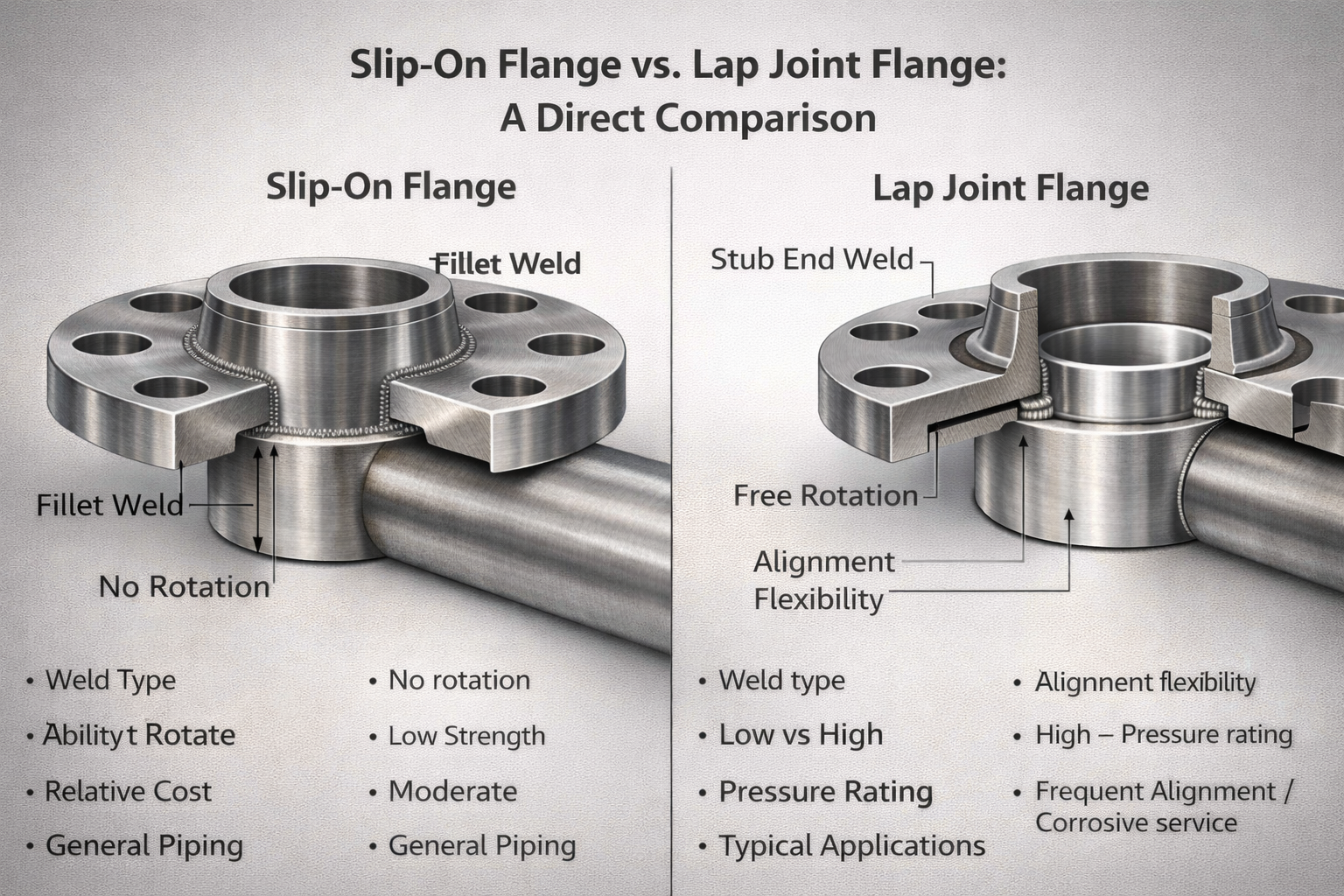
Slip-On Flange: The pipe slides into the flange, and two welds fix it in place permanently.
Lap Joint Flange: A two-piece system with a welded stub end and a loose, rotating backing flange.
The choice between them depends on whether you need a low-cost, permanent connection or flexibility for future maintenance and system changes.
The table below summarizes the core differences to help you compare them quickly.
| Feature | Slip-On Flange | Lap Joint Flange |
| Design & Parts | Single piece. | Two pieces: a stub end and a backing flange. |
| Connection Method | Slips over pipe, then welded inside and outside. | Stub end is welded to the pipe. Backing flange is loose and not welded. |
| Primary Advantage | Lower initial cost, simple installation. | Allows easy bolt hole alignment and system disassembly. |
| Maintenance & Access | Permanent. Requires cutting for disassembly. | Excellent. Backing flange can rotate and be removed easily. |
| Material Cost Strategy | Entire flange is one material. | Stub end can be an expensive alloy; backing flange can be cheaper carbon steel. |
| Best For | Permanent, low-pressure systems. Budget-sensitive projects. | Systems needing frequent disassembly or alignment flexibility. |
| Typical Applications | Water treatment, HVAC, general plant utilities. | Chemical, food & beverage processing, systems with exotic pipe materials. |
How They Work and When to Use Them
Here’s a closer look at each flange type and their ideal applications.
1. Slip-On Flanges:
The Simple, Permanent Connection
A slip-on flange has a slightly larger bore than the pipe’s outer diameter. You slide it over the pipe, then secure it with two fillet welds: one where the pipe meets the flange hub, and one on the inside. This makes it simple to install and align.
This flange is common in ASME B16.5 standards and typically used in low to moderate pressure systems. Its main advantage is lower upfront cost, but its fatigue life is less than a weld neck flange.
Use a slip-on flange when:
- You are installing a permanent system with low maintenance needs.
- Initial project cost is a major concern.
- You need straightforward installation for systems like water, air, or fire protection lines.
2. Lap Joint Flanges:
The Flexible, Serviceable Connection
A lap joint flange is a two-part system:
- Stub End: A short piece of pipe with a flared end. This gets welded to your main pipe.
- Backing Flange: A loose ring that fits over the stub end. It is not welded.
The key benefit is flexibility. The backing flange can rotate independently, making it much easier to align bolt holes during installation or reassembly. This design is perfect for systems that need frequent opening for cleaning, inspection, or modification, such as in food processing or chemical plants.
Another advantage is material savings. Only the stub end contacts the fluid, so you can use a corrosion-resistant alloy (like stainless steel) for it while using a cheaper material (like carbon steel) for the backing flange.
Use a lap joint flange when:
- You anticipate needing to take the system apart regularly.
- Piping alignment is challenging and bolt holes are hard to match.
- You want to save money by using a less expensive backing flange material.
Frequently Asked Questions
Q: Can a lap joint flange handle high pressure?
A: No. They are generally suited for low to medium-pressure systems. For high-pressure, high-stress applications, a weld neck flange is the standard choice.
Q: What is a common mistake when using lap joint flanges?
A: A common error is welding the backing flange to the stub end or pipe. This defeats its purpose. The backing flange should remain loose to allow for rotation and disassembly.
Q: Are slip-on flanges weaker because they aren’t butt-welded?
A: Yes, for demanding applications. The double fillet weld of a slip-on is strong enough for its rated pressure, but it is more susceptible to fatigue from vibration or pressure cycles compared to the butt weld of a weld neck flange.
Q: Do slip-on flanges have different face types?
A: Yes. Like other flanges, they come with different sealing faces. The most common is the Raised Face (RF). They can also have a Flat Face (FF) or a Ring-Type Joint (RTJ) for specific sealing needs.
Choosing the Right Flange:
Choosing the right flange directly impacts your system’s long-term reliability and maintenance cost. If your project involves frequent maintenance, difficult alignment, or costly pipe materials, the lap joint’s flexibility is key. For standard, permanent installations, the slip-on flange offers a cost-effective and reliable solution.
Need help selecting the best flange for your specific system pressure, maintenance plan, and material requirements? Our team can guide you to the right choice. Submit your project details for a quote or technical consultation here: http://texasflange.com/lp12/